

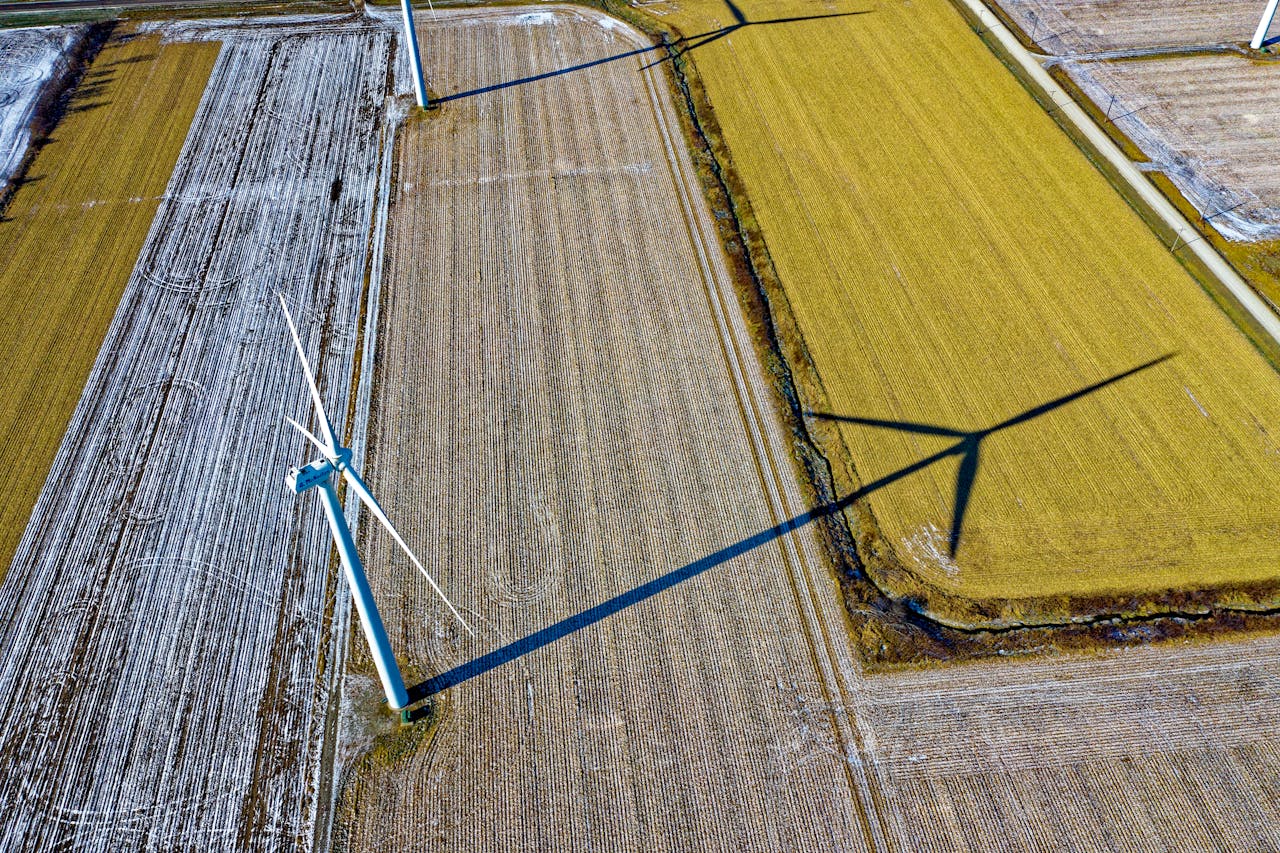
Introduction: A Green Horizon for Chhattisgarh
Chhattisgarh, famously known as the Rice Bowl of India, stands at the cusp of a transformative era in renewable energy. With vast tracts of paddy fields generating millions of tonnes of agricultural residue every year, the state is perfectly positioned to lead India’s biomass energy future Chhattisgarh.
At the heart of this transformation is Mansha Agrofuel Private Limited, whose 3 TPH biomass pellet plant in Kurud, Dhamtari district, is already converting paddy straw, paddy husk, and sawdust into clean, high-calorific-value fuel (3,400–3,600 kcal/kg).
Discover the promising Future Outlook for Biomass Energy in Chhattisgarh, where visionary projects like ours are turning waste into wealth while creating jobs and cutting carbon emissions.

Integrating Remote Sensing and Land-Use Change to Identify Potential Wetland Restoration Areas: A Multiyear Analysis Using Landsat Data | Springer Nature Link
Image: Chhattisgarh map highlighting paddy-rich Dhamtari and industrial hub Raipur – the epicentre of biomass growth.
Current Strengths Powering Tomorrow’s Growth
The state’s natural advantages are unmatched:
- Abundant paddy straw and husk from extensive cultivation.
- Proximity of Kurud to Raipur’s industrial cluster (power plants, rice mills, steel units, cement plants, brick kilns).
- Existing policy push for biomass co-firing and stubble-burning reduction.
These factors create a perfect ecosystem for rapid scaling. Mansha Agrofuel’s in-house baling infrastructure and short 20–30 km procurement radius ensure raw-material security, giving us a clear competitive edge in the renewable outlook India.
Policy and Market Drivers Accelerating Expansion
Central and state policies are the strongest tailwinds:
- Mandatory biomass co-firing in thermal power plants (NTPC and Chhattisgarh State Power Generation).
- Stricter emission norms pushing industries toward cleaner fuels.
- ESG focus among corporates driving demand for sustainable pellets.
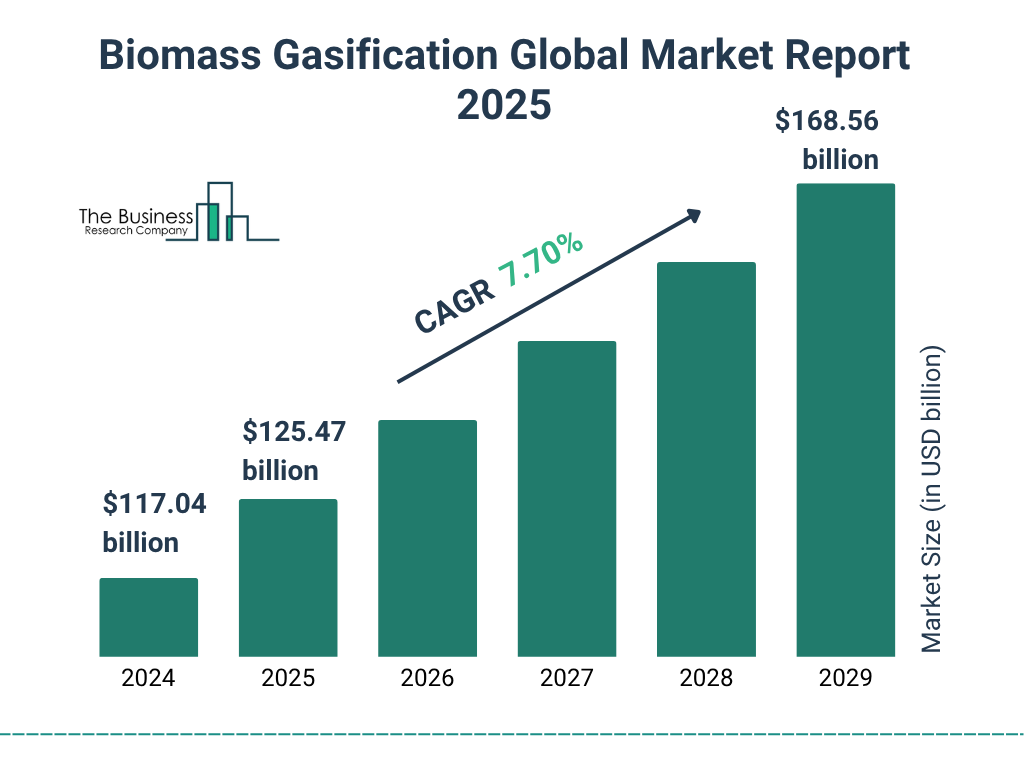
thebusinessresearchcompany.com
Biomass Gasification Market Share, Size, Growth 2026 to 2035
Infographic: Biomass market growth projection (adapted for Chhattisgarh context) showing 7.7%+ CAGR potential through 2030.
Market demand segments are expanding rapidly:
| Demand Segment | Current Trend | Projected Opportunity (2025–2030) | Mansha Agrofuel Advantage |
|---|---|---|---|
| Thermal Power Plants | Co-firing mandate | High-volume off-take | Proximity to NTPC & state plants |
| Industrial Boilers | Rising coal prices | Steady replacement demand | 6–12 mm pellets with consistent GCV |
| Rice Mills & Agro-processors | Continuous thermal need | Local, reliable supply | Direct linkage with nearby mills |
| Brick Kilns | Shift to cleaner fuels | Seasonal bulk lifting | Cost-effective alternative |
| Large Industries | ESG & decarbonisation | Long-term contracts | Certified, low-ash pellets |
Mansha Agrofuel’s Roadmap: From 3 TPH to Scalable Leadership
Our long-term vision is crystal clear:
- Stabilise the 9,000 MT annual capacity plant in Kurud.
- Strengthen farmer linkages through collection centres and baling machines.
- Gradually enhance production capacity based on market demand.
- Diversify into allied biomass products (briquettes, torrefied pellets, etc.).
By 2030, we aim to scale to 10+ TPH across multiple locations in Chhattisgarh, creating hundreds of direct and indirect jobs while supplying pellets to Raipur’s industrial cluster and beyond.

Reliance Bioenergy | Reliance Industries Limited
Image: Aerial view of a modern biomass energy facility – the kind of future-ready infrastructure Mansha Agrofuel is building.
5-Year Growth Projection Table (Conservative Estimates)
| Year | Plant Capacity (TPH) | Annual Production (MT) | Estimated Turnover (₹ Cr) | Key Milestones |
|---|---|---|---|---|
| 2025 | 3 | 7,200 | 58–65 | Full commercial operation + first contracts |
| 2026 | 3 | 8,100 | 68–75 | Farmer linkage expansion |
| 2027 | 5 | 13,500 | 115–125 | Second line commissioning |
| 2028 | 7 | 18,900 | 165–180 | Diversification into briquettes |
| 2029 | 10 | 27,000 | 240–260 | Multi-location plants |
| 2030 | 12+ | 32,400+ | 290–320 | Regional leadership in biomass fuel |
(Note: Projections based on 5% annual price rise and progressive capacity utilisation as outlined in our DPR.)

Policy, regulatory issues, and case studies of full-scale projects – ScienceDirect
Infographic: Biomass value-chain expansion roadmap showing farmer linkage → pellet production → industrial supply.
Challenges and Our Mitigation Strategies
While the biomass energy future Chhattisgarh is bright, we remain realistic about challenges:
- Seasonal paddy straw availability → Addressed through advance baling and storage.
- Price volatility → Long-term B2B contracts and diversification.
- Power reliability → Backup systems and future solar integration.
Our comprehensive risk-mitigation matrix ensures operational resilience.
Community & Environmental Impact
Every tonne of pellets we produce prevents open-field burning, improves air quality, and returns value to farmers. By 2030, our expanded operations will generate direct employment for over 100 people and indirect livelihoods for thousands in rural Dhamtari and beyond.
Join the Green Revolution
The biomass energy future Chhattisgarh is not a distant dream — it is happening now. Mansha Agrofuel is proud to be at the forefront, turning agricultural waste into clean energy while creating jobs and protecting the environment.
Whether you are an industrial buyer looking for reliable biomass pellets, a farmer wanting to monetise residue, or an investor seeking sustainable opportunities — the future is bright. Contact us today to be part of Chhattisgarh’s renewable success story. Mansha Agrofuel Private Limited, Chhattisgarh +91-9681062068 or mansha.agrofuel@gmail.com
Word count: 1,478