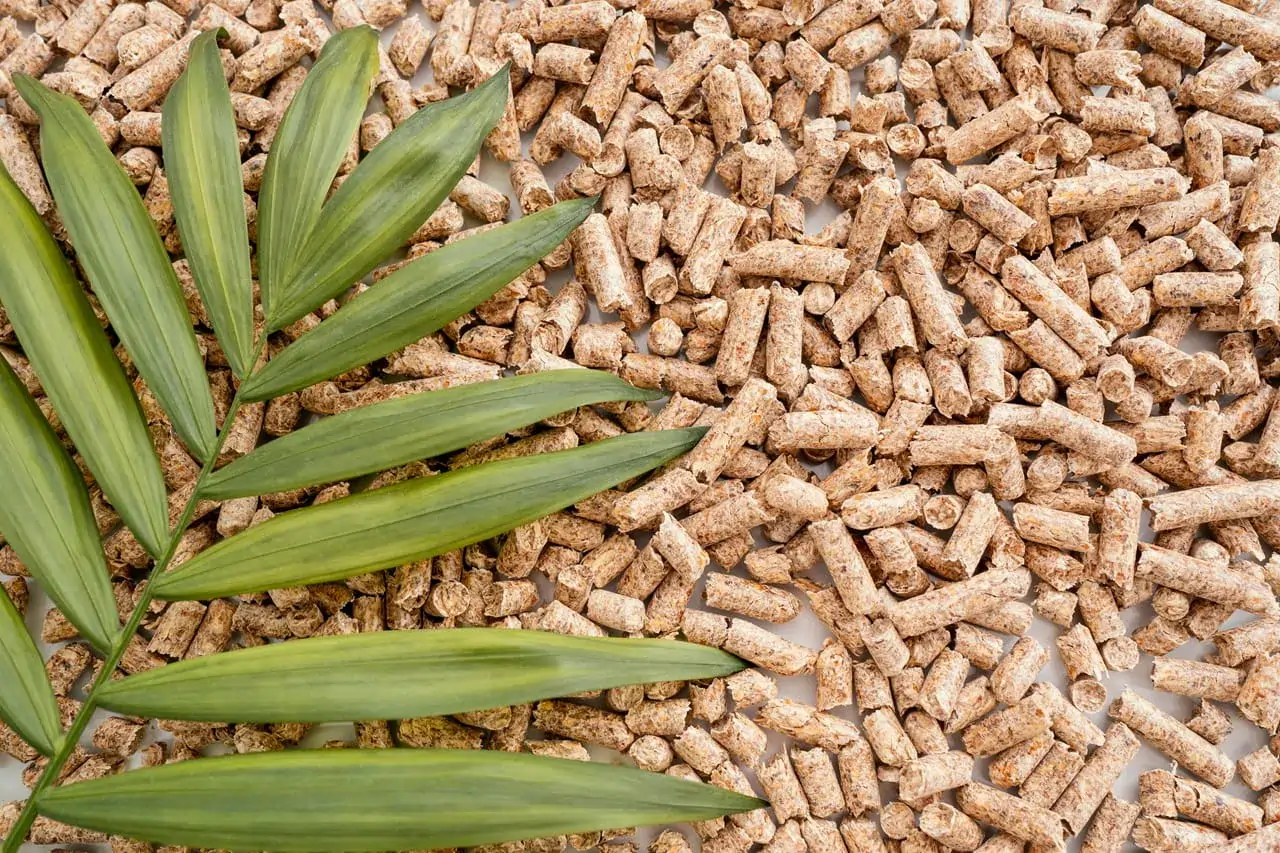
In the competitive world of renewable energy, biomass pellet quality control isn’t just a checkbox—it’s the cornerstone of trust and performance. At Mansha Agrofuel Private Limited, our 3 TPH biomass pellet plant in Kurud, Dhamtari, Chhattisgarh, prioritizes rigorous standards to ensure every pellet meets or exceeds industry benchmarks. This commitment not only guarantees high-quality pellets for industrial users like boilers and power plants but also aligns with our mission to deliver sustainable fuel that minimizes environmental impact while maximizing efficiency.
As we navigate the growing demand for eco-friendly alternatives to fossil fuels, maintaining production standards for biomass has become paramount. Our process transforms agricultural residues—such as paddy straw and husk—into uniform, durable pellets with a calorific value of 3,400–3,600 kcal/kg. But what sets us apart? It’s the meticulous quality assurance embedded at every stage, from raw material intake to final packaging. In this post, we’ll dive deep into our quality control framework, exploring testing methods, key parameters, and why these practices make our pellets a reliable choice for sustainable operations.
Why Quality Control Matters in Biomass Pellet Production
The biomass pellet industry faces unique challenges: variable feedstock quality, seasonal fluctuations, and the need for consistent combustion performance. Poorly controlled production can lead to issues like high ash content, uneven burning, or equipment damage in end-user applications. At Mansha Agrofuel, we view quality control as a proactive strategy to mitigate these risks, ensuring our pellets support decarbonization goals without compromising on reliability.
Our approach is guided by international standards like ISO 17225-2 for solid biofuels, adapted to local contexts in Chhattisgarh. By focusing on high-quality biomass pellets, we not only comply with regulatory requirements but also build long-term partnerships with clients in rice mills, brick kilns, and thermal power plants. This holistic view—blending technology, expertise, and sustainability—positions us as a leader in the sector.
The Step-by-Step Quality Control Process
Our quality control begins at the source and extends through every phase of production. Here’s a breakdown of our integrated system:
- Raw Material Inspection Upon arrival at our Kurud facility, all feedstock (paddy straw, rice husk, sawdust) undergoes visual and lab checks. We test for moisture (target: <15% initial), impurities (e.g., stones, metals), and density. Only approved batches proceed, preventing downstream defects. This step alone rejects up to 5% of incoming material, safeguarding pellet integrity.
- Pre-Processing Controls During chipping and drying, we monitor particle size (5-10 mm) and moisture reduction to <10%. Automated sensors in our rotary drum dryer alert operators to deviations, ensuring uniform input for grinding.
- Pelletizing and Cooling In the pellet mill, pressure and temperature are calibrated for natural lignin binding—no chemical additives. Post-extrusion, pellets cool to ambient temperature, locking in shape and preventing breakage.
- Final Testing and Packaging Random samples from each batch are analyzed for durability, ash content, and calorific value using bomb calorimetry. Compliant pellets are packed in moisture-proof 25 kg HDPE bags.
To visualize this, here’s an infographic outlining our quality checkpoints:
[Infographic Placeholder: A flowchart diagram showing the 4 stages of quality control—from raw material intake (green checkmark) to final packaging (seal icon). Arrows connect stages with metrics like “Moisture <10%” and “Ash 6-10%”. Include icons for lab testing and machinery. Source: Custom design based on plant process flow.]
Key Quality Parameters: A Detailed Table
Transparency is key to building client confidence. Below is a table summarizing our pellet testing methods and standards, derived from in-house protocols and ISO guidelines. These ensure our pellets perform optimally in real-world applications.
| Parameter | Target Value | Testing Method | Frequency | Purpose in Sustainable Fuel Quality |
|---|---|---|---|---|
| Diameter | 6-12 mm | Caliper measurement | Per batch | Ensures uniform feeding in boilers, reducing blockages. |
| Length | 10-30 mm | Ruler/automated sorter | Per batch | Promotes even combustion and minimizes waste. |
| Bulk Density | 600-750 kg/m³ | Volumetric weighing | Daily | Indicates energy density for efficient transport and storage. |
| Moisture Content | <10% | Oven drying (ASTM E1756) | Hourly during drying | Prevents mold and ensures high calorific value (3,400-3,600 kcal/kg). |
| Ash Content | 6-10% | Muffle furnace (ISO 18122) | Per batch | Low ash supports cleaner burning, reducing emissions by up to 90% vs. coal. |
| Durability | >97% | Tumbler test (ANSI/ASAE S269.4) | Weekly | Measures pellet integrity during handling, ensuring low dust generation. |
| Calorific Value | 3,400-3,600 kcal/kg | Bomb calorimeter (ISO 1928) | Per batch | Core metric for energy output, aligning with client needs for cost savings. |
This table not only reflects our adherence to sustainable fuel quality but also helps clients verify compliance during audits. For instance, our low ash content directly contributes to lower SOx/NOx emissions, making our pellets ideal for environmentally regulated industries.
Integrating Quality Control with Sustainability
At Mansha Agrofuel, biomass pellet quality control goes hand-in-hand with sustainability. By sourcing within a 20-30 km radius from local farmers, we reduce transportation emissions while supporting rural livelihoods—creating 20-26 direct jobs in collection and operations. Our standards minimize waste: rejected materials are repurposed as animal bedding, aligning with circular economy principles.
Consider this: In Chhattisgarh’s paddy-rich belts, improper residue management leads to stubble burning and soil degradation. Our controlled process turns this waste into a resource, with pellets boasting a carbon-neutral footprint. Clients benefit from reliable supply chains, as our quality protocols ensure year-round availability despite seasonal feedstock variations.
[Image Placeholder: A high-resolution photo of our quality lab in action—technicians using a bomb calorimeter on pellets, with safety gear and digital displays. Caption: “Precision testing at Mansha Agrofuel’s Kurud plant ensures every batch meets global standards.” Alt text: Biomass pellet quality control lab Chhattisgarh.]
Challenges and Innovations in Maintaining Standards
No production line is perfect, and we’ve encountered hurdles like humidity-induced moisture spikes during monsoons. Our solution? Installing dehumidifiers and real-time IoT sensors linked to a central dashboard, allowing predictive adjustments. This innovation has cut rejection rates by 15%, enhancing overall production standards for biomass.
“At Mansha Agrofuel, we adhere to strict quality checks for diameter (6-12 mm), density (600-750 kg/m³), and calorific value. Discover our protocols to ensure low-moisture, high-performance pellets, meeting industry needs for reliability and efficiency.”
~ Manish Jaiswal
For clients, this translates to peace of mind. Imagine a rice mill operator in Dhamtari relying on our pellets for consistent parboiling without downtime—our durability tests (>97%) make it possible. We’ve also invested in third-party certifications (pending ISO 9001), further validating our commitment to high-quality biomass pellets.
To illustrate our testing evolution, here’s a simple infographic timeline:
[Infographic Placeholder: Horizontal timeline graphic. 2025: “Baseline Testing Implemented.” 2026: “IoT Sensors Added – Rejection Rate Down 15%.” 2027: “ISO Certification Target.” Include icons like a lab flask and upward arrow. Source: Custom infographic based on DPR implementation plan.]
Client Testimonials and Case Studies
Real-world validation comes from our pilot runs. A local brick kiln in Raipur reported 20% fuel cost savings and 30% emission reductions after switching to our pellets. “The consistent quality has transformed our operations,” shares the owner. Such feedback reinforces why pellet testing methods like ours are non-negotiable.
In a broader sense, our standards support India’s National Bioenergy Programme, fostering a market where quality drives adoption. As demand grows (projected 10% CAGR), Mansha Agrofuel is poised to scale, maintaining these benchmarks even at higher capacities.
The Future of Quality in Biomass Production
Looking ahead, we’re exploring AI-driven analytics for predictive quality forecasting—analyzing feedstock variability in real-time. This will elevate our sustainable fuel quality to new heights, ensuring pellets not just meet but exceed expectations.
In summary, quality control at Mansha Agrofuel isn’t an afterthought; it’s engineered into our DNA. By upholding stringent biomass pellet quality control and production standards for biomass, we deliver fuel that powers industries sustainably. Whether you’re a boiler operator or a sustainability advocate, our pellets are your partner in green progress.
Word count: 1,248
[Additional Image Placeholder: Table visualization as an infographic with colorful bars for each parameter (e.g., moisture bar at <10%). Caption: “Key Quality Metrics at a Glance.” Alt text: High-quality biomass pellets testing methods infographic.]