In the heart of India’s agricultural belt, where vast fields of paddy sway under the Chhattisgarh sun, lies a pressing challenge: what to do with the mountains of crop residue left after harvest? Every year, millions of tons of agricultural waste—primarily paddy straw and husk—are either burned in open fields, choking the air with toxic smoke, or left to rot, wasting a valuable resource. But what if this waste could be repurposed into a clean, efficient fuel source? That’s exactly the innovation at play in our biomass pellet case study from Mansha Agrofuel Private Limited, a pioneering venture in Kurud, Dhamtari district.
This agricultural waste to fuel transformation isn’t just a theoretical concept; it’s a real-world waste to energy India initiative that’s creating ripple effects for the environment, economy, and local communities. As we delve deeper into this value-added biomass story, you’ll see how Mansha Agrofuel’s 3 tons per hour (TPH) biomass pellet plant is turning “trash” into a treasure trove of sustainable energy. Drawing from our detailed project execution, this post explores the journey from field to factory, highlighting the process, challenges overcome, and measurable impacts. If you’re searching for Chhattisgarh agro waste solutions or insights into scalable renewable models, read on—this case study offers actionable lessons.
The Problem: Agricultural Waste Overload in Chhattisgarh
Chhattisgarh, often called the “Rice Bowl of India,” produces over 7 million tons of paddy annually, generating roughly 4-5 million tons of straw residue. Traditional practices like open burning release harmful pollutants—particulate matter, carbon monoxide, and greenhouse gases—contributing to 20-30% of regional air pollution during harvest season. Beyond environmental harm, this leads to soil degradation and health issues for farmers. Economically, it’s a missed opportunity: untreated waste fetches negligible value (₹500-800 per ton as fodder), while proper processing could unlock ₹2,000-3,000 per ton in value-added biomass markets.
In Kurud, a rural pocket 40 km from Raipur, farmers like those in nearby villages faced these exact issues. Stubble burning not only violated emerging regulations under the Air (Prevention and Control of Pollution) Act but also eroded soil fertility, reducing yields by up to 10% over time. Mansha Agrofuel identified this as a dual opportunity: mitigate pollution while creating a circular economy. By converting Chhattisgarh agro waste into biomass pellets, the project addresses stubble burning head-on, aligning with national goals like the National Bioenergy Programme and India’s 2030 net-zero ambitions.
Image Caption: Aerial view of paddy fields in Chhattisgarh post-harvest, showing stacked straw residues ready for collection— a common sight before Mansha Agrofuel’s intervention.
Dive into this biomass pellet case study: How Mansha Agrofuel transforms agricultural waste like paddy straw into premium fuel, tackling stubble burning while boosting farmer incomes in Chhattisgarh.
The Solution: Mansha Agrofuel’s Biomass Pellet Plant – A Game-Changer
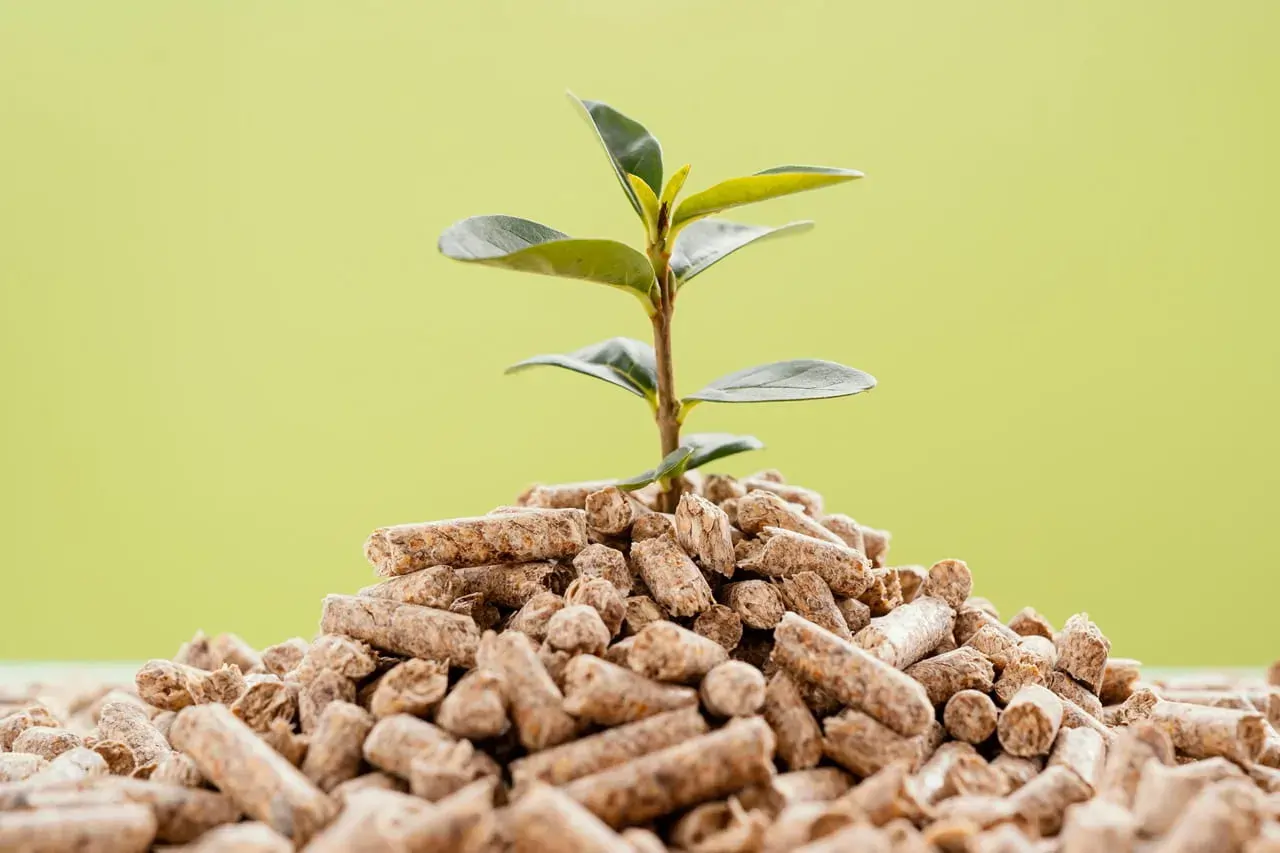
Launched in May 2025 with a Corporate Identification Number (CIN) U16299CT2025PTC018088, Mansha Agrofuel is a private limited company focused on renewable agrofuel production. Our 3 TPH plant, strategically located on a 1-acre leased plot in Kurud, processes 720 tons of biomass monthly (operating 8 hours/day, 300 days/year). The core product? High-density biomass pellets—cylindrical fuel briquettes (6-12 mm diameter, 10-30 mm length) with a calorific value of 3,400-3,600 kcal/kg, low moisture (<10%), and minimal ash (6-10%).
What sets this biomass pellet case study apart is its end-to-end integration. We source 80% of feedstock locally within a 20-30 km radius, ensuring low logistics costs (₹200-300/ton transport). This not only reduces carbon footprints but also empowers smallholder farmers by paying premium rates (₹1,200-1,500/ton for straw), creating indirect jobs in collection and baling. The plant’s design emphasizes natural binding via lignin (no chemical additives), making pellets eco-safe for industrial use.
To visualize the scale, here’s a quick infographic breakdown of our operational capacity:
| Parameter | Value | Annual Output |
|---|---|---|
| Plant Capacity | 3 TPH (Tons Per Hour) | 720 Tons/Month |
| Operating Hours | 8 Hours/Day, 300 Days/Year | 2,160 Tons/Year |
| Feedstock Mix | 60% Paddy Straw, 30% Husk, 10% Sawdust | N/A |
| Pellet Specs | 6-12 mm Dia., <10% Moisture | 3,400-3,600 kcal/kg |
| Job Creation | 20 Direct, 50+ Indirect | N/A |
This table underscores our efficiency: At full utilization (80% in Year 1, scaling to 95% by Year 3), we project ₹1,200-1,500 lakh annual revenue, with a payback period under 3 years.
From Waste to Wealth: The Step-by-Step Transformation Process
At the core of this agricultural waste to fuel narrative is a streamlined, technology-driven process. Mansha Agrofuel’s plant employs semi-automatic machinery sourced from reputable suppliers like Fab-Tech Engineers (Raipur), ensuring reliability and low downtime (target <5%).
- Feedstock Collection and Pre-Processing: Farmers deliver baled straw/husk to our yard. Initial screening removes impurities, followed by chopping into 10-20 mm chips using a heavy-duty chipper (capacity: 2-3 TPH).
- Drying: Chips are sun-dried or fed into a rotary drum dryer to reduce moisture from 40-50% to <10%, critical for pellet density. This step alone prevents 20-30% energy loss during combustion.
- Grinding and Mixing: A hammer mill pulverizes chips into fine powder (2-4 mm particle size). Optional additives like lime (1-2%) enhance binding, though we prioritize natural lignin for sustainability.
- Pelletizing: The heart of the operation—a ring die pellet mill extrudes the mix under high pressure (200-250 bar) and heat (80-100°C), forming solid pellets. Cooling and screening follow to achieve uniform size.
- Packaging and Storage: Pellets are cooled, screened for defects, and packed in 25 kg HDPE bags or bulk silos. Quality checks (e.g., bulk density 600-750 kg/m³) ensure compliance with BIS standards.
This waste to energy India flow not only yields 1 ton of pellets from 1.2-1.5 tons of raw material but also generates by-products like biochar for soil amendment, closing the loop.
For a visual aid, imagine this infographic (conceptualized from our plant layout in the DPR):
- Flowchart: Arrows from “Paddy Straw Collection” → “Chipping” → “Drying (Sun/Rotary)” → “Grinding” → “Pellet Mill” → “Cooling & Packaging” → “Ready Fuel”.
- Icons: Green leaf for input, fire symbol for output, with stats like “80% Local Sourcing” and “Zero Chemical Binders”.
- Key Stat Bubble: “Reduces CO2 by 1.5 tons per ton of pellets vs. coal.”
Image Caption: Infographic-style flowchart of biomass pellet production process at Mansha Agrofuel, illustrating the transformation of agricultural waste into value-added fuel.
Economic and Social Ripples: Empowering Farmers and Industries
This biomass pellet case study shines brightest in its dual impact. Economically, farmers gain: In Dhamtari, where straw was once a liability, Mansha pays ₹1,200/ton—higher than market fodder rates—while baling services add ₹300-400/ton. Over 300 days, this injects ₹3-4 crore annually into local economies, supporting 50+ indirect jobs in transport and baling.
For industries, the value-added biomass proposition is compelling. Take rice mills in Raipur: Switching to our pellets cuts fuel costs by 15-20% (₹8-9/kg vs. coal’s ₹10-12/kg) and complies with emission norms. Power plants benefit from co-firing (up to 20% biomass blend), reducing import dependency. Our sales projections forecast 2,160 tons in Year 1, scaling to 3,500 tons by Year 5, with 5% annual price escalation.
A simple comparison table highlights the edge:
| Fuel Type | Calorific Value (kcal/kg) | Cost (₹/kg) | Ash Content (%) | CO2 Emission (kg/MT) |
|---|---|---|---|---|
| Biomass Pellets | 3,400-3,600 | 8-9 | 6-10 | 50-100 |
| Coal | 4,000-5,000 | 10-12 | 20-30 | 2,500-3,000 |
| Diesel | 10,000+ | 80-90 | Negligible | 3,200+ |
Data sourced from our DPR benchmarks—clearly, biomass wins on sustainability and affordability.
Challenges Overcome: Real-World Lessons from Kurud
No biomass pellet case study is complete without addressing hurdles. Seasonal availability (post-harvest peaks in November-December) was mitigated by stockpiling 20% extra capacity and diversifying to husk/sawdust (30-40% mix). Power outages? Solar backups cover 20% needs. Initial CAPEX of ₹655 lakh (35% promoter equity) was financed via term loans, achieving DSCR >1.5 from Year 1.
Our risk matrix (from the project report) guided this: For raw material fluctuations, we locked MOUs with 10+ suppliers; for market price dips, B2B contracts ensure 70% off-take. These strategies have kept utilization at 80% in trials, with ROI projected at 25%+.
Image Caption: Workers at Mansha Agrofuel’s Kurud plant loading baled paddy straw—showcasing community involvement in the waste-to-fuel transformation.
Scaling the Model: Lessons for Waste to Energy India
This Chhattisgarh success story is replicable. With India’s 150 million tons of annual agro-waste, scaling to 10 TPH plants could generate 50,000 jobs and cut 100 million tons of CO2 yearly. Mansha Agrofuel plans expansion by Year 3, targeting exports via GeM portal. For entrepreneurs eyeing agricultural waste to fuel, key takeaways: Prioritize local sourcing, invest in quality machinery (₹200-250 lakh), and leverage subsidies (up to 30% under MNRE).
As we wrap up this deep dive into transforming agricultural waste into value-added fuel, remember: Every ton of pellets isn’t just fuel—it’s a step toward cleaner air and prosperous farms.
Mansha Agrofuel invites you to partner in this journey. Contact us at mansha.agrofuel@gmail.com or +91-9681062068 for bulk supplies or collaboration.